Playa Encuentro, CabareteA Local's Guide, Filmed from Above
Filmed at Playa Encuentro, 2025–2026
Most guides describe Playa Encuentro as a surf spot. It is one — the most consistent on the North Coast. But that's not what I notice first every time I arrive.
What I notice first is that it feels closed off, in a good way. You park before you reach the beach, and a line of plants keeps cars out of the communal area. There's no row of vehicles parked on the sand, no engines idling next to your towel. You walk in under palm and almond trees, and by the time you see the water the road is already behind you.
I keep coming back to film Encuentro — surf sessions, a festival, whales, the places around it. This is the beach as I know it, from the ground and from above.
Where Playa Encuentro Is and How to Get There
Encuentro sits between Sosúa and Cabarete in Puerto Plata province, a few minutes west of Cabarete town. From Puerto Plata International Airport (POP) it's roughly 20–30 minutes by car, which makes it one of the easiest serious surf beaches in the Caribbean to reach straight off a flight.
The last stretch is a dirt road. At the end there's a parking area, and from there you walk in. That small detail shapes the whole beach: it stays quiet and green, and it belongs to the people on foot.
The beach itself is a long stretch of sand backed by trees. In a lot of places there's shade all day; in others the palms open up and you get full sun. You choose — which on a Caribbean beach at midday matters more than it sounds.
Surfing at Encuentro: Five Breaks on One Beach
Encuentro isn't one wave. It's a reef with several breaks in front of the same beach, which is why it has something rideable most days of the year. The ones surfers name most often:
- La Derecha — a right with two peaks, usually called the most consistent wave on the North Coast.
- La Izquierda — a hollow, fast left for performance surfing.
- Bobo's Point — consistent peaks, best from low to mid tide.
- Coco Pipe — powerful and hollow, best at high tide on a north swell.
- Destroyer — a heavy, shallow left over sharp reef. Experts only.
Winter and spring bring the best north swells. Most days, mornings are cleaner, before the trade winds build in the afternoon.
From above you can see what the reef is doing — and why the lineup forms where it does.
Surf Schools and Board Rentals
If you've never surfed — or haven't in a while — take a lesson. The reef and the crowd are the two things that catch people out at Encuentro, and a local instructor knows exactly where to put you.
Dominican Surf School teaches right on the beach — they're friends of mine, and they're who I'd send anyone learning. Buena Onda rents boards and serves food, so you can surf, eat and go back out without leaving the shade.
There are more schools along the beach — Cabarete Surf Company, Bobo Surf's Up, Go Surfing DR and Encuentro Surf School among them — so you'll find a lesson any morning you show up.
Food, Yoga and the Rest of the Day
Encuentro has a lot of places to eat for a beach without a town around it. My two favorites are Bonsai and Pura Vida — a small, relaxed spot a few steps from the sea, good for fresh juice and something light after a session.
And the day doesn't have to be about surfing. There's yoga under a palm-thatched roof, music some afternoons, events under the trees. What I like most is how communal it all feels. You see kids playing on their own, with no parents hovering over them, because that's the kind of place it is. And the air smells like plants and salt — pure nature.
Where the Dominican Surf Festival Happens
Encuentro is also home to the Dominican Surf Festival — a surf contest that turns into bachata, aerial silks in the trees and a local market. I filmed the 2025 edition from the sand and from the air.
That mix is the clearest picture of what Encuentro is: surfers, families, dancers and kids hanging from silks under the almond trees, all on the same beach. Read the full festival story.
Whale Season: January to March
Every winter, humpback whales come to Dominican waters to mate and give birth — roughly from January to March, with February usually the busiest month. Most people go to Samaná Bay to see them. Fewer know they also pass along the North Coast.
I filmed these off Encuentro in February 2026: two adults and a calf. You can't plan for it here the way you can in Samaná. But if you're in the water in February, keep looking out past the lineup.
Whales are protected in Dominican waters. If you see them, enjoy them from a distance and let them pass.
Living Near Encuentro
The same things that make Encuentro a good beach — shade, quiet, a community that knows each other, waves almost every day — are why more people now want to live close to it rather than just visit.
The area between Sosúa and Cabarete has filled in with residential projects over the last few years: villas, apartment buildings with pools, and gated communities like Ocean Palms, one of the larger developments near the beach, with security at the entrance. For a surfer, being able to walk or drive five minutes to the best wave on the coast changes daily life completely.
If you're thinking about buying here, read what the real ROI of property in the Dominican Republic looks like and how long a title transfer actually takes before you sign anything.
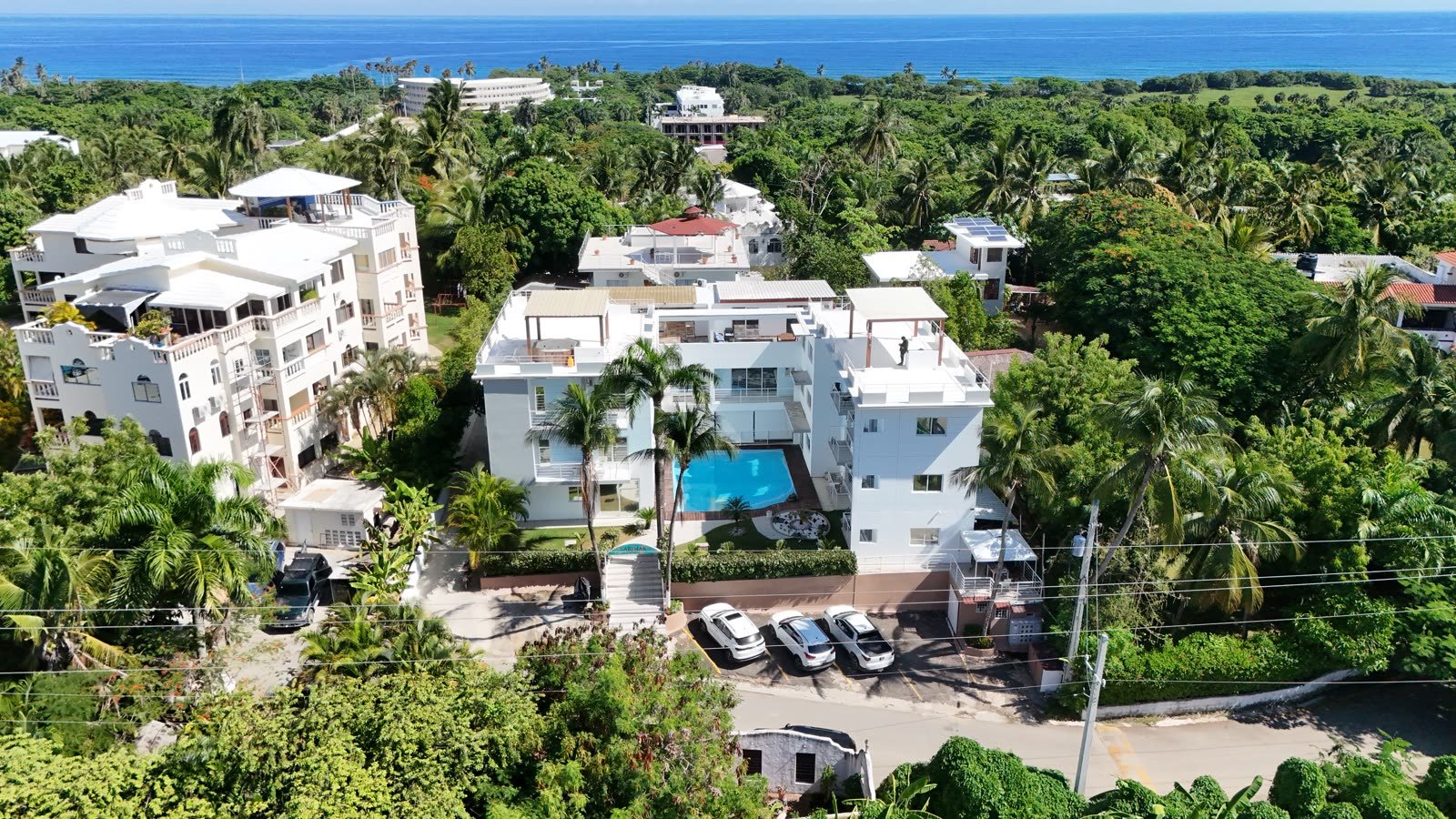
Selling a Property Near Encuentro?
Buyers looking at this area aren't buying square meters. They're buying the morning surf, the shade, the walk to the beach. A listing that only shows bedrooms misses the reason they're looking.
I film properties the way this article was made: drone video that shows where the house sits in relation to the beach and the breaks, plus ground footage of the life around it. See my drone videography and content creation services.
See Drone VideographyRunning a Business at Encuentro?
Surf schools, restaurants, yoga studios and rentals at Encuentro all compete for the same visitors — and most of them decide where to go from their phone, before they arrive.
If you want footage that shows your place the way it feels in person, or help getting found on Google and Instagram, get in touch. I live here, and I already know the beach.
Questions people ask
Where is Playa Encuentro?
Playa Encuentro is on the North Coast of the Dominican Republic, between Sosúa and Cabarete in Puerto Plata province — a few minutes west of Cabarete town and roughly 20–30 minutes by car from Puerto Plata International Airport (POP).
Is Playa Encuentro good for beginner surfers?
Yes, with a lesson. The inside sections get soft, rolling whitewater that works for learning, and several surf schools teach on the beach every day. The outside reef breaks are for intermediate and advanced surfers. The bottom is reef with sandy patches, so beginners should go with an instructor the first few times.
When is the best time to surf Encuentro?
Winter and spring bring the most consistent north swells, but Encuentro has something rideable most of the year. Mornings are usually cleaner, before the trade winds pick up in the afternoon.
Is there parking at Playa Encuentro?
Yes. There is a parking area before you reach the beach, and plants close off the communal area to cars, so vehicles stay back from the sand.
Can you see whales at Playa Encuentro?
Sometimes. Humpback whales are in Dominican waters roughly from January to March, and they do pass along the North Coast — the footage in this article was filmed off Encuentro in February 2026. Samaná Bay is still the main whale-watching destination; on the North Coast a sighting is luck, not a schedule.
Where can you eat at Playa Encuentro?
There are several places right on the beach. Two favorites are Bonsai and Pura Vida, and Buena Onda serves food next to its board rentals.