From Broken Campaigns to €1.14 Per Conversion
Atlantic Surf School — Castletownbere, Ireland
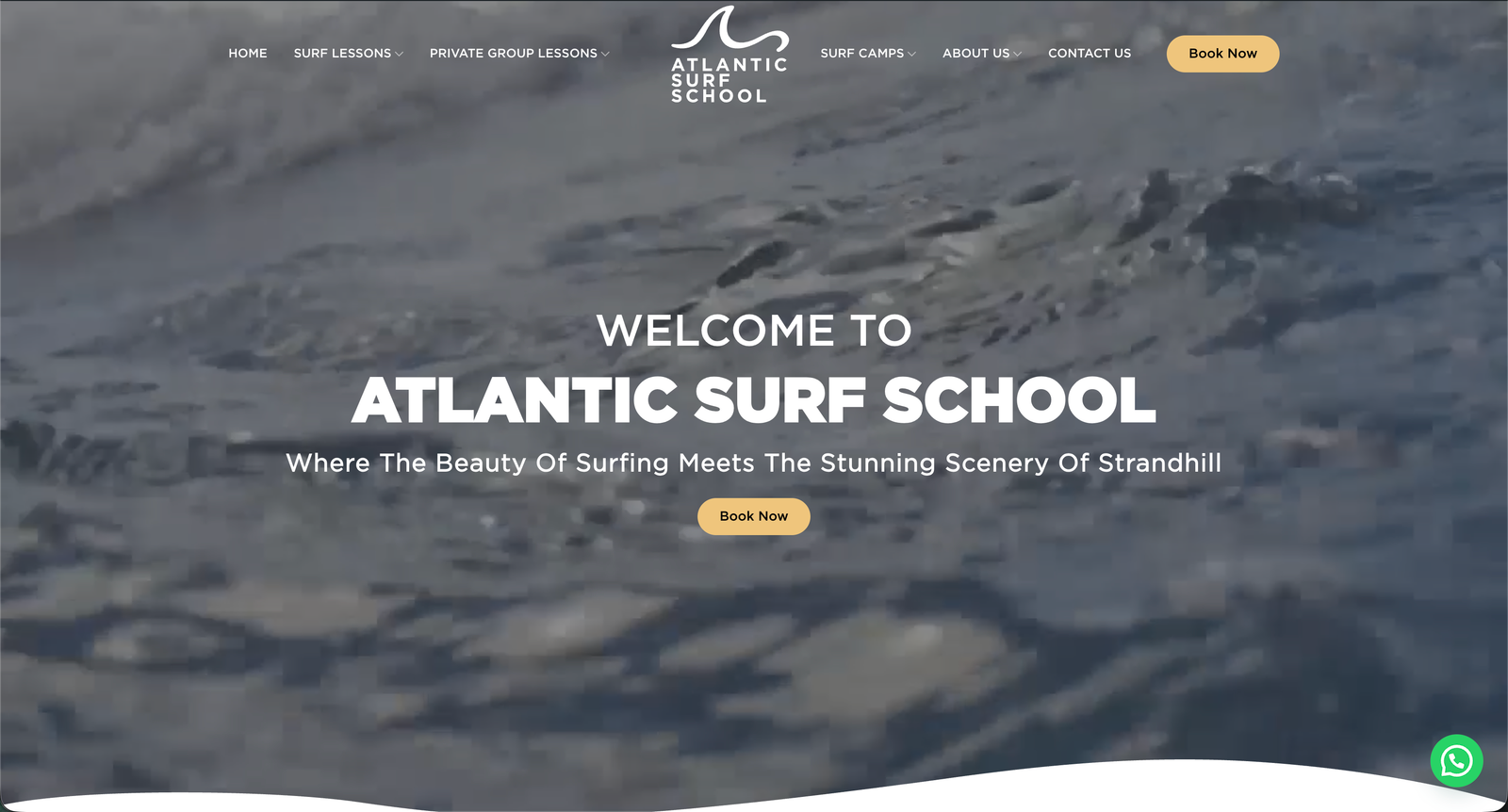
atlanticsurfschool.ie — the site behind the campaigns
01 — The Problem
The Challenge
Atlantic Surf School had Google Ads campaigns running when they first reached out — but the campaigns weren't generating real bookings. They were getting clicks, but no measurable leads. The core issue: conversions weren't being tracked properly, so Google had no signal to optimize toward. The campaigns were running blind.
The booking system ran through Bloowatch — a third-party platform embedded directly into their website. Standard conversion tracking doesn't work with embedded third-party forms. Without tracking actual booking form submissions, Google was optimizing for clicks instead of customers.
02 — The Approach
The Solution
Rebuild from scratch
Rather than patching the existing campaigns, I started fresh. Full keyword research focused on high-intent search terms used by tourists arriving in Ireland looking for surf lessons. Structured ad groups, tight keyword match types, and ad copy written specifically for the target audience: international visitors, families, and group bookings.
Conversion tracking through a third-party embed
The technical challenge was setting up conversion tracking for a Bloowatch booking form running as an embed. Using Google Tag Manager, I configured custom triggers that detect when users complete the booking form inside the embedded widget — allowing Google Ads to register actual conversions, not just page visits or clicks. This changed everything: the campaign could now optimize toward real bookings.
Performance-based campaign structure
With real conversion data flowing into Google Ads, I switched to a conversion-based bidding strategy. The campaign started learning from actual booking completions — not proxy metrics. Cost per conversion dropped consistently as the algorithm optimized toward the users most likely to complete a booking.
03 — The Crisis
One Year Later: A New Website Broke Everything
About a year after launch, the Irish government offered Atlantic Surf School a new website. They accepted — and the new site went live. Shortly after, they reached out again: the campaigns had stopped performing and they didn't know why.
The diagnosis was clear: the new website had completely different HTML structure, link paths, and button elements. Every conversion trigger I had configured in Tag Manager was now pointing at elements that no longer existed. Google could no longer measure real conversions, so it reverted to optimizing for clicks — and performance collapsed.
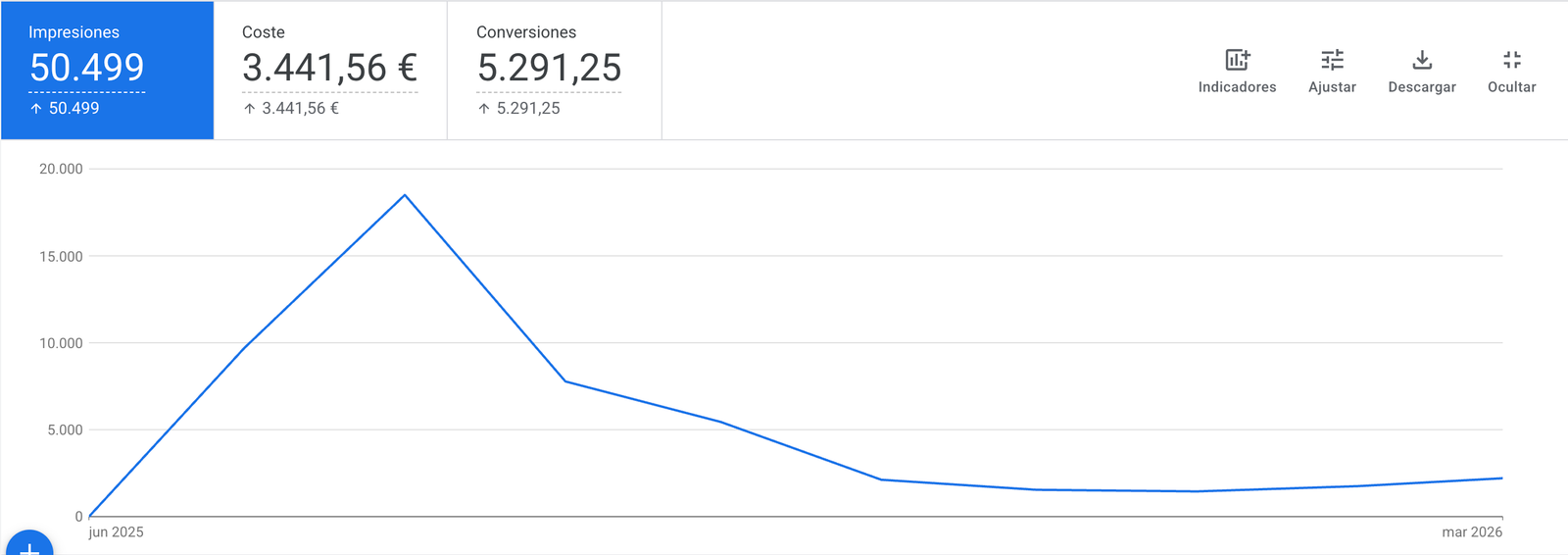
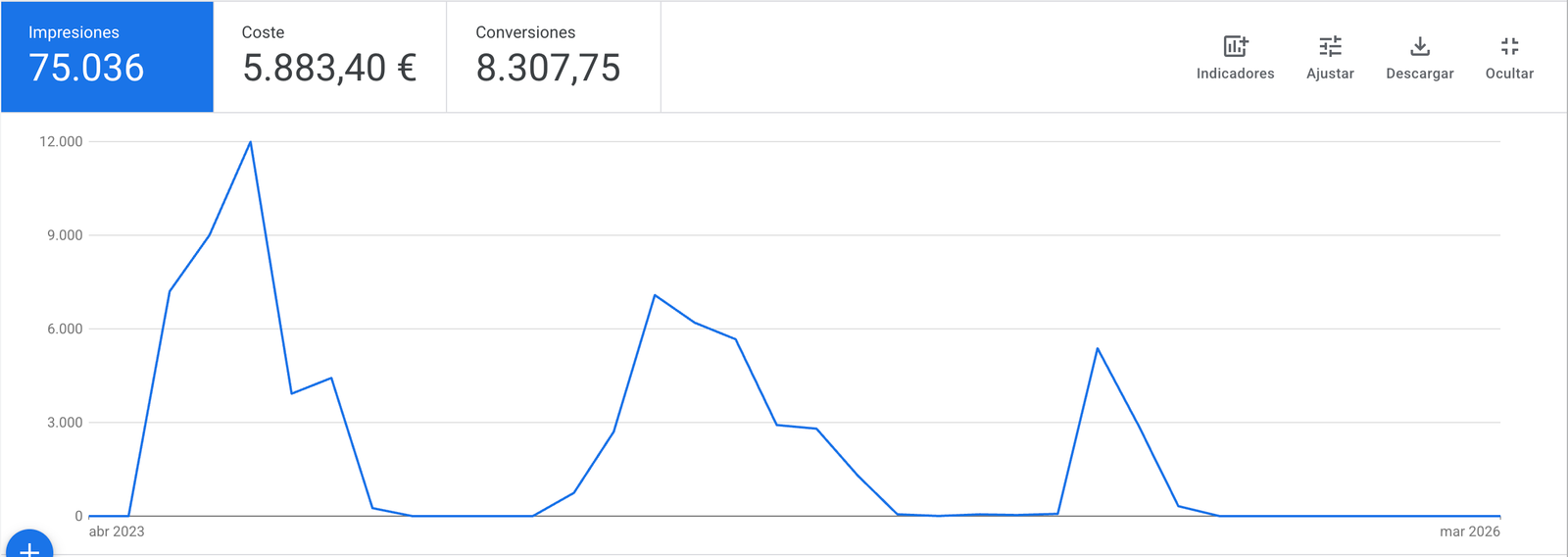
Seasonal peaks visible across 3 years — summer surge, off-season maintenance, recovery after site change.
04 — The Results
The Results
- 75,036
- Total impressions generated
- 8,307
- Conversions tracked
- €1.14
- Average cost per conversion
- 3+
- Years of continuous campaign management (April 2023 – present)
Numbers reflect cumulative campaign performance tracked via Google Ads conversion tracking. Optimized continuously — keyword pruning, bid adjustments, ad copy testing, and seasonal budget pacing.
05 — Analysis
Why It Worked
Technical Setup
Most Google Ads managers skip proper conversion tracking. Setting up Tag Manager triggers for a third-party booking embed is not standard practice — but it's what made the difference between campaigns that guess and campaigns that learn.
Seasonal Strategy
Ireland has clear surf seasons. Budget allocation, bid adjustments, and campaign pausing are calibrated to match real demand patterns — maximizing spend efficiency across peak and off-peak periods.
Long-term Relationship
Three years of continuous management means the campaigns have compounded knowledge. Every optimization, every test, every seasonal adjustment builds on the last. That's not something you get from a one-time setup.
Need campaigns that actually convert?
Whether you're starting from scratch or fixing what's broken — I can help.