The first thing I do when a new real estate client reaches out isn't look at their listings. I pull up PageSpeed Insights and run their homepage.
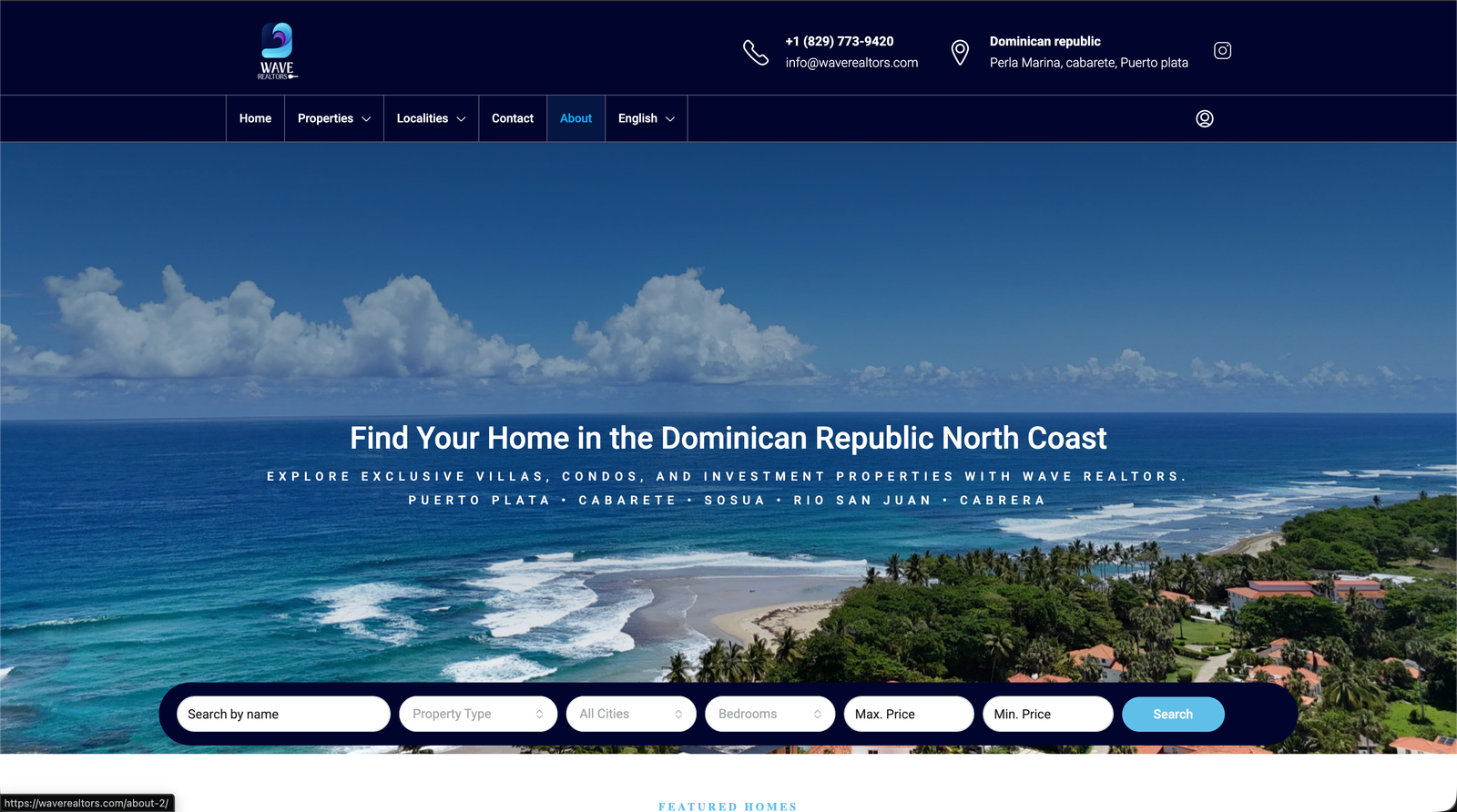
In four years of working with agencies and independent agents on the North Coast Dominican Republic — Cabarete, Sosúa, Puerto Plata — I've never had a client come to me and say "our website is too slow." But I've never run that test and gotten a green score either.
That's where the conversation usually starts.
PageSpeed Insights: Why Your Score Is Killing Your Visibility
PageSpeed Insights gives you a number between 0 and 100. For most real estate websites in Cabarete, Sosúa, and Puerto Plata, that number sits somewhere between 30 and 55 on mobile.
Google's threshold for "good" is 90+. Anything below 80 is actively affecting your conversion rate — and on the North Coast, where internet speeds can be inconsistent, the impact is even more pronounced than in other markets.
A score of 40 doesn't just mean the site loads slowly. It means Google is deprioritizing it in search results. It means a buyer in Toronto opens your listing on their phone, waits four seconds, and leaves before it loads. It means the work you put into your listings, your photos, your descriptions, is invisible to the people it's meant for.
The irony is that most of these sites look fine on a desktop. The design is clean, the listings are organized, the contact form works. But the mobile experience — which is how the majority of international buyers first encounter a North Coast property — is broken in ways the owner never sees.
One pattern I see constantly: agencies using IDX plugins that pull in live listing data from external feeds. These plugins are often the single biggest performance killer on a real estate site. They add dozens of external requests on every page load, and most of them aren't configured with any caching or lazy loading. A site running an unoptimized IDX plugin can lose 30–40 points on PageSpeed before any other issue is even addressed.
The Listing Trap: Why Focusing Only on Listings Hurts Your Rankings
Here's the pattern I see most often: an agency invests real effort in their property listings. They write descriptions, upload photos, set the price, add the location. Some even translate the listing into Spanish and English.
But the homepage hasn't been touched in two years. The about page has three sentences and a stock photo. The contact page has a form that sends to an email nobody checks daily.
Google doesn't rank listings in isolation. It ranks websites. And it judges a website by the quality of every page — not just the ones you care about.
When I audit a North Coast agency site, I look at the five pages Google sees first: homepage, about, contact, and the two most-linked listing pages. In most cases, those first three pages have no meta titles, no meta descriptions, and no clear signal of what the agency does, where they operate, or who their ideal buyer is.
A listing for a $450,000 condo in Kite Beach can rank on page one of Google. But if the homepage it links back to has a PageSpeed score of 38 and no English content in the main navigation, the domain authority pulling that listing up is almost zero.
What International Buyers on the North Coast Actually Do
International buyers — from Canada, Germany, the Netherlands, the US — don't start their property search on a real estate portal. They start on Google.
They search things like "buy apartment Cabarete beachfront" or "real estate investment Dominican Republic North Coast." They click a result, spend 8 to 12 seconds on the page, and either stay or leave. If they stay, they look for three things: proof that the agency is legitimate, properties that match their criteria, and a way to contact a real person without filling out a form that feels like it goes nowhere.
Most North Coast websites fail at all three — not because the agency isn't legitimate, or doesn't have the right properties, or doesn't respond to inquiries. But because the website doesn't communicate any of that in the first 10 seconds.
Optimizing Metadata for North Coast Real Estate Listings
Every listing on a real estate website has metadata — a title tag and meta description that appear in Google search results before anyone clicks. These are the first thing a buyer reads about a property.
Most agencies upload listings without ever looking at this. The default title becomes something like "Property #4872 — Agency Name." The meta description is blank, so Google picks a random sentence from the page body.
Compare that to a listing that reads: "3-bedroom beachfront condo in Kite Beach, Cabarete — $395,000 — ocean views, full amenities, expat-friendly." That's the difference between a click and a scroll past.
I've audited sites with 200+ active listings where every single one had a default or blank meta title. The listings existed. Google had indexed them. But nobody was clicking because there was nothing to click on.
What a Well-Built Real Estate Website in the Dominican Republic Actually Does
A real estate website that generates leads on the North Coast does four things consistently:
It loads in under 2.5 seconds on mobile. That's Google's LCP threshold for "good" — achievable with the right setup even with high-resolution property images, as long as plugins are configured correctly and images are properly compressed.
It speaks to the buyer in their language from the first line. If 70% of your buyers are international, your homepage, your about page, and your key listing pages need to be in English. Not translated from Spanish — written in English from the start.
It treats every page as a potential entry point. A buyer might land on a listing page, an area guide, or a blog post before they ever see your homepage. Each of those pages needs to introduce the agency, build credibility, and offer a clear next step.
It makes contact feel easy and human. A WhatsApp link, a name, a face. Not just a form with five required fields.
Where to Start If Your Website Isn't Generating Leads
Run PageSpeed Insights on your homepage right now — it's free. Paste your URL and check the mobile score. If it's under 80, that's the first thing to address. Not the listings, not the design — the speed.
Then look at your five most visited pages in Google Analytics or Search Console. Check if each one has a unique meta title and meta description that includes the property location and a reason to click.
Then open your homepage on a phone — not a desktop. Is it clear in 10 seconds what you sell, where you operate, and how to contact you?
If any of those three fail, the listings you're uploading every week aren't getting the visibility they deserve.
If you want a clear picture of what's working and what isn't — page speed, metadata, mobile experience, and how Google is reading your listings across the North Coast Dominican Republic — I offer a free audit. No pitch. Just a specific, actionable diagnosis of your site as it stands today.