A buyer in Amsterdam is looking at two listings for beachfront condos in Cabarete. Both are priced around $380,000. Both have interior photos — clean, well-lit, professionally shot. One has a drone video. The other doesn't.
The one with the video gets the inquiry.
I've seen this enough times that it's stopped being a theory and become a pattern I plan around. The drone footage isn't just a nice addition to a listing — it's the thing that answers the question international buyers are actually asking. Which is never just "what does this apartment look like?" It's "where exactly is this, what's around it, and can I trust what the photos are showing me?"
What Drone Video Shows That Photos Can't
Property photography has a fundamental limitation: it shows the inside of a property well, and the outside poorly.
A wide-angle lens can make a 40m² studio look spacious. A skilled photographer can frame a terrace to hide the fact that it faces a parking lot. A well-edited gallery can make almost any property look worth considering.
Buyers know this. The international buyers purchasing real estate video production Dominican Republic agencies need to serve — whether as a vacation home, an investment, or a permanent relocation — are almost always experienced buyers. They've bought property before. They've been burned by photos before.
Drone footage removes the doubt. It's the difference between showing and proving.
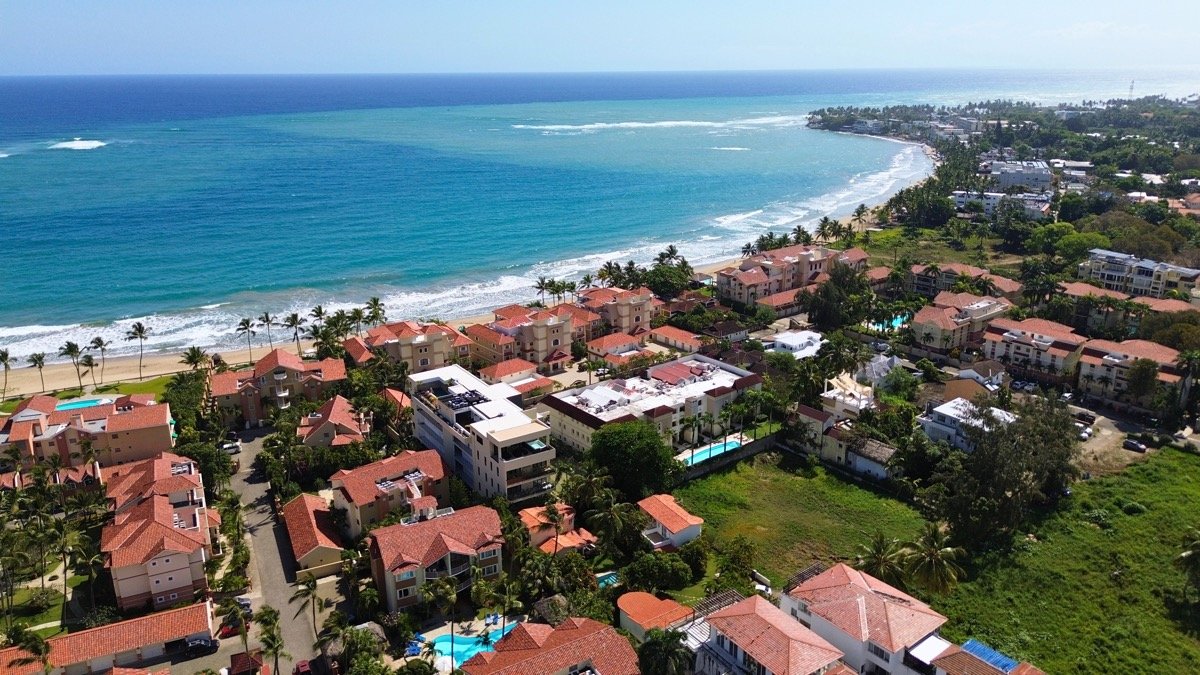
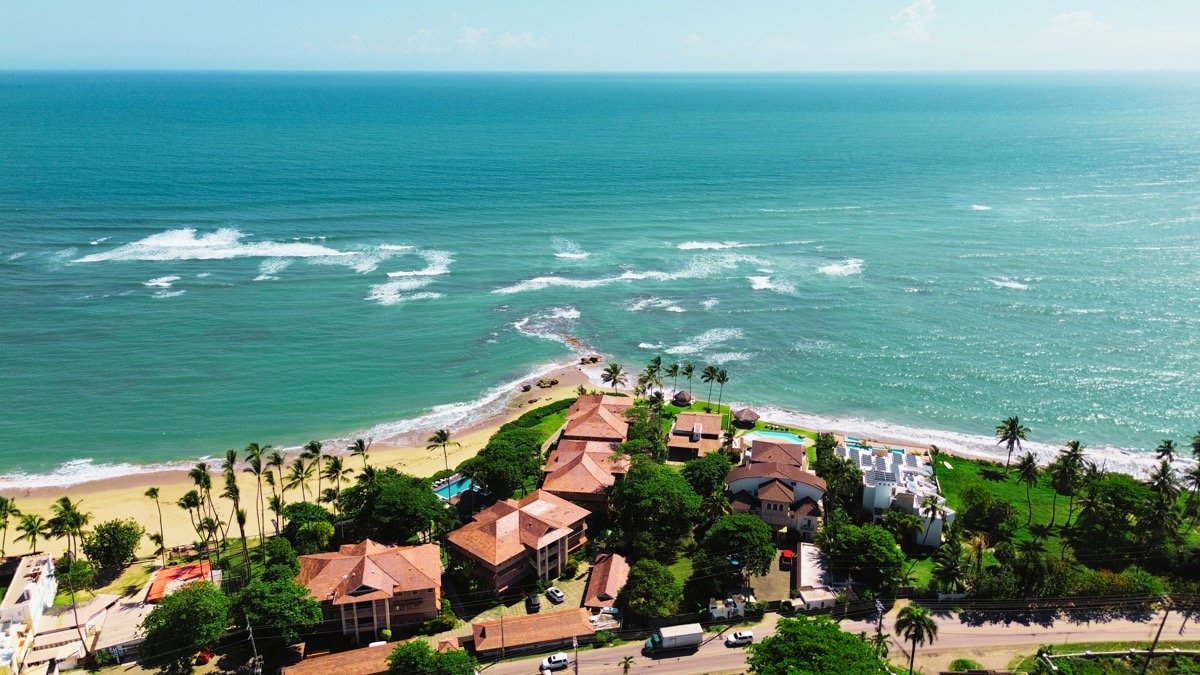
Think of it this way: photos show the what — the apartment, the finishes, the view from the terrace. Drone video shows the where — the location relative to the beach, the neighborhood, the surrounding environment. That combination is what converts a skeptical international buyer into someone who books a flight.
The Geography Problem on the North Coast
The North Coast Dominican Republic has a geography that doesn't translate well to maps or written descriptions.
Tell a buyer from Munich that a property is "beachfront in Cabarete" and they have a vague mental image. Show them a drone shot that opens over the Atlantic, pans south over Kite Beach, and settles on the property sitting 30 meters from the waterline — and they have an exact picture.
This matters more here than in markets where buyers can easily visit. Someone considering a $500,000 investment in Cabarete or Sosúa from Germany isn't flying out to see a property on a whim. They're making a significant financial decision based almost entirely on digital content. The drone video isn't supplementary — it's often the closest thing to being there.
There's another benefit that's underused in the market: context. A drone shot shows what's next to the property. Is there a vacant lot beside it where someone might build and block the ocean view? Is there a beach bar nearby that might be loud on weekends? Is the "beachfront" label accurate, or is there a road between the building and the water?
High-net-worth buyers value that honesty. Showing them the full picture — even when it's not perfect — builds more trust than a gallery of carefully cropped interior shots. And it prevents the kind of post-visit disappointment that kills deals.
What Separates Useful Drone Footage From Filler
Not all drone video is created equal. I've seen listing videos where the aerial footage is technically present but functionally useless — a 30-second clip from directly above the property, no movement, no context, no story.
Good aerial footage for real estate on the North Coast does specific things:
It establishes location first. The opening shot answers "where is this property?" before anything else — ideally with the ocean or a recognizable landmark in frame. For a Cabarete listing, that might mean opening over Kite Beach and panning toward the property. For Sosúa, it might mean starting over the bay.
It shows proximity honestly. How far is the beach, really? What does the walk from the property to the waterline look like from above? Is the pool private or overlooked by neighboring buildings? A well-planned drone pass answers these questions in under 20 seconds.
It matches the pace of the property. A luxury villa with Atlantic views gets a slow, cinematic pan. A surf camp gets something with more energy. The footage needs to feel like the property — not like a technical demonstration of what the drone can do.
It's properly color graded. Raw DJI footage has a flat, washed-out look that doesn't do justice to the colors of the North Coast — the deep green of the hills, the gradient from turquoise to dark blue as the water deepens. A proper color grade in DaVinci Resolve makes the difference between footage that looks professional and footage that looks like someone's vacation video.
How I Shoot Drone Footage on the North Coast
The window for drone work on the North Coast falls in two slots: morning, between 9:00 and 10:00 AM before the trade winds build, and late afternoon, between 4:00 and 5:00 PM when the light turns golden and the wind typically drops. Shooting outside those windows — especially midday — means fighting both harsh flat light and the gusts that Cabarete is famous for among kitesurfers worldwide.
I check Windy.com the night before every shoot and again the morning of. If wind speeds are forecast above 20 km/h at flight altitude during the target window, I reschedule. No exceptions.
For a standard property shoot, I plan three to five drone sequences: an establishing shot from distance, a proximity pass showing the relationship between the property and the beach or pool, a detail pass over standout features, and a final pull-back that ends on the property in the context of its surroundings. Each sequence gets reviewed on-site before I pack up. If the light shifted or a boat moved through frame at the wrong moment, I reshoot it before leaving.
This process — knowing the local wind patterns, working within the right light window, reviewing on location — is what separates drone services Sosúa and Cabarete clients should expect from a local operator versus someone flying in for a one-day job with no context for the environment.
Drone Footage as Social Media Content
A listing video shot for the web doesn't have to stay on the web. The same drone footage — especially wide establishing shots and proximity passes — adapts directly to Instagram Reels and short-form vertical content.
Agents on the North Coast who are building their personal brand on Instagram know the challenge: they need a constant supply of high-quality visual content that looks premium without being repetitive. A single property shoot can produce the full listing video, three to five Reel-ready clips, and individual stills pulled from the drone footage — all from the same morning.
The aerial view of a beachfront property at 7 AM, with the Atlantic lit up and the coastline visible in both directions, is the kind of content that stops the scroll. It performs as a listing and as a brand-building post simultaneously. That's the leverage a well-produced shoot creates.
What a Complete Listing Video Needs
Drone footage works best as part of a complete listing video — not as a standalone clip. The aerial shots establish location and context. The interior footage shows the property itself. Together they give a buyer the closest thing to a property visit they can get from 6,000 kilometers away.
For a property priced above $300,000 on the North Coast, a listing video should run between 90 seconds and 3 minutes. The structure I use: drone establishing shot (10–15 seconds), interior walkthrough (60–90 seconds), drone proximity and detail shots (20–30 seconds), drone pull-back as closing shot (10 seconds). Under 2.5 minutes total. Works on the listing page, on Instagram, on YouTube, and sent directly to buyers via WhatsApp.
And a note worth making: having a great listing video doesn't help if your website loads slowly or isn't showing up in Google when buyers search. If you're producing strong visual content but still not getting inquiries, the issue might be technical. Read why your PageSpeed score might be costing you leads here.
When Drone Footage Changes the Outcome
The clearest example I can give is a beachfront villa shoot in Sosúa. The property had been listed for several months with interior photos only. The agency had inquiries, but most stalled at the "can you send more photos?" stage — a sign that buyers weren't convinced by what they were seeing.
After the drone shoot, the listing was updated with a full video. In the first week after the update, the agency received three serious inquiries from buyers who had seen the listing before and hadn't followed up. The video answered the questions the photos couldn't.
If you have listings on the North Coast that aren't generating the inquiry volume they should — or if you're preparing to list a property and want to give it the best possible presentation to international buyers — drone videography is the single highest-impact addition you can make.